I chose a rainy day for this mountain trip. Partly on purpose - that kind of weather usually keeps most hikers off the trails. I was also hoping for soft light, intense green, and the kind of forest atmosphere that's hard to find in full sunshine.
For the first few hours, nothing in particular happened. I walked through the forest, stopped at different sections of the path, tried various compositions - but none of them had that one element that holds the eye a little longer.
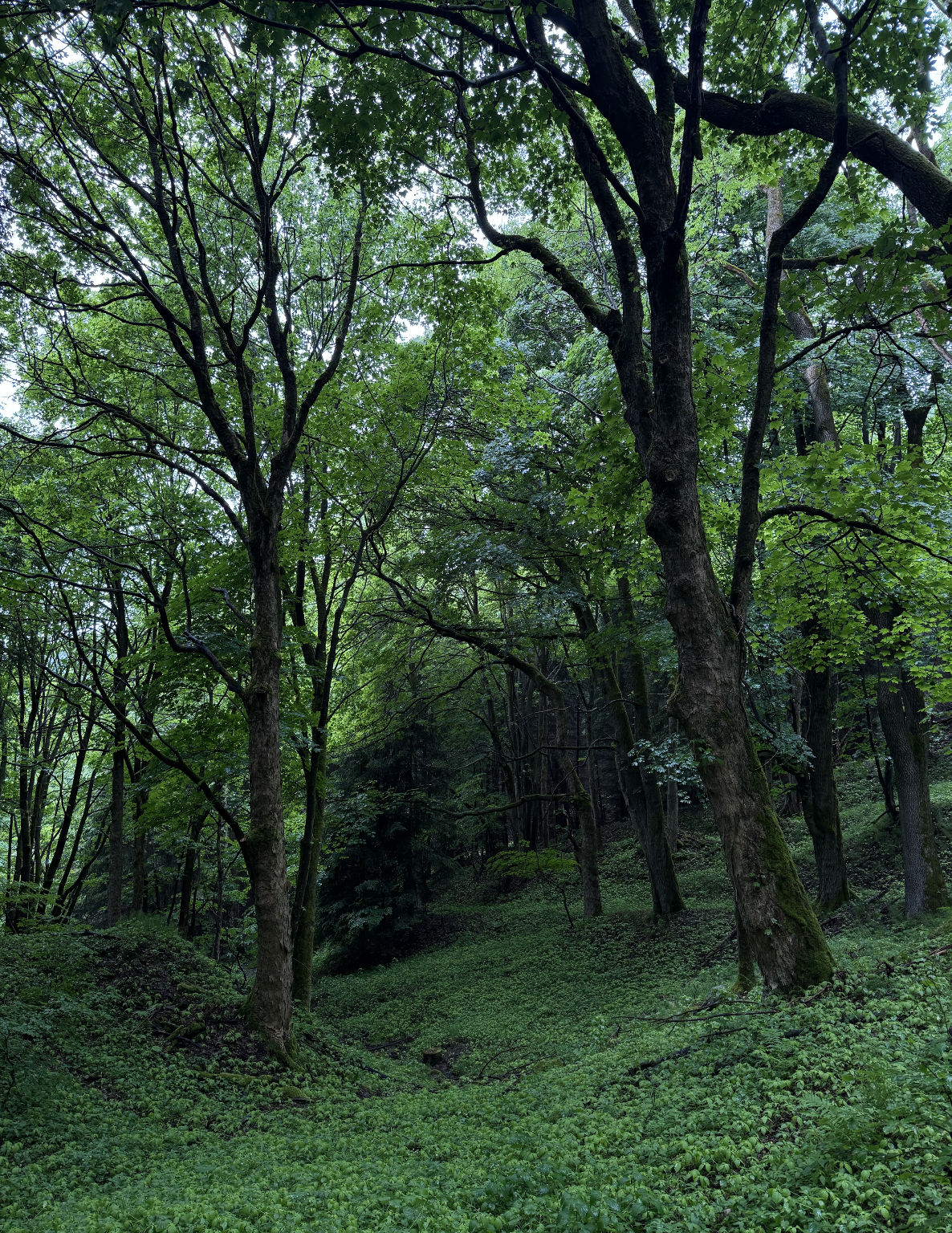
The place had great atmosphere: wet green, darker trunks, and soft light breaking through the canopy.
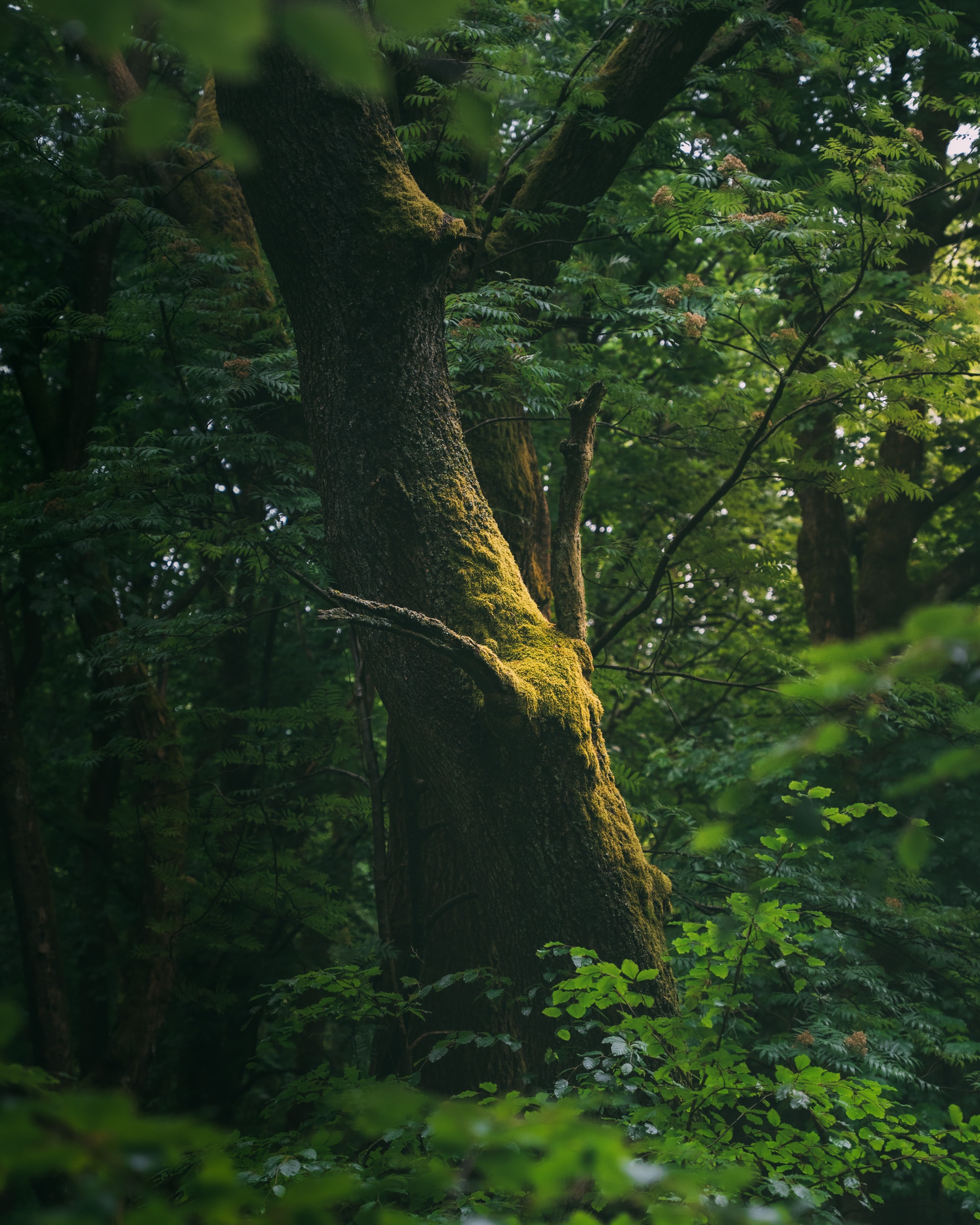
At some point I stepped off the trail and came across a few oak trees. Each was interesting in its own way - covered in moss, heavy, old, with bark texture well-defined by the moisture.
From a distance, one of them looked like a solid subject for a forest frame. It had a strong silhouette, a bent trunk, and branches spreading in different directions - so for a while I photographed it more as a form than as a specific story.
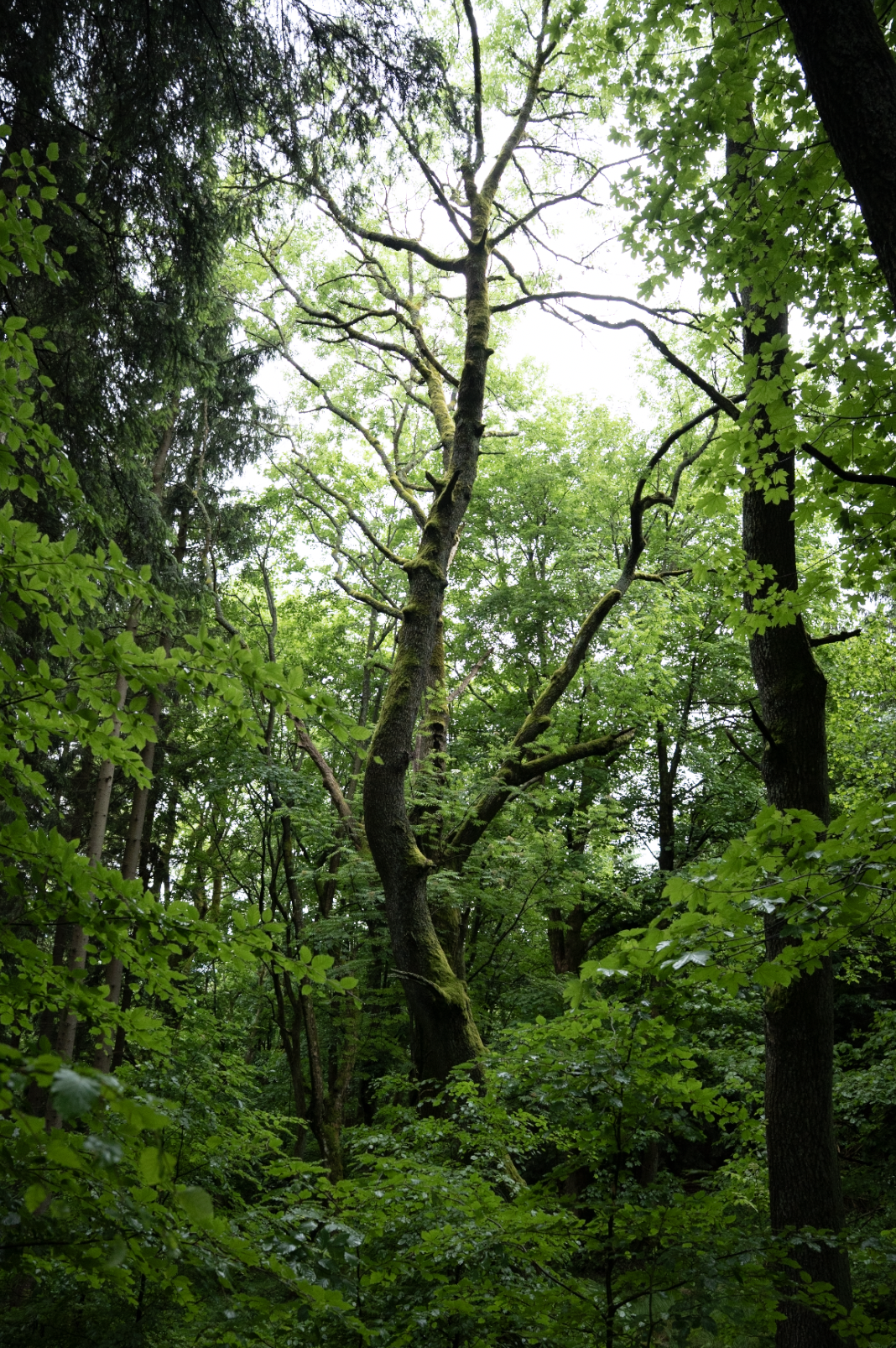
I set up the tripod and started looking for a tighter composition. I wanted the moss, bark, and leaves to work together as a whole, but something still felt off - there was no clear focal point. In the RAW file the scene was already interesting, just flat and chaotic. A lot of green, a lot of small branches, many elements competing for attention.
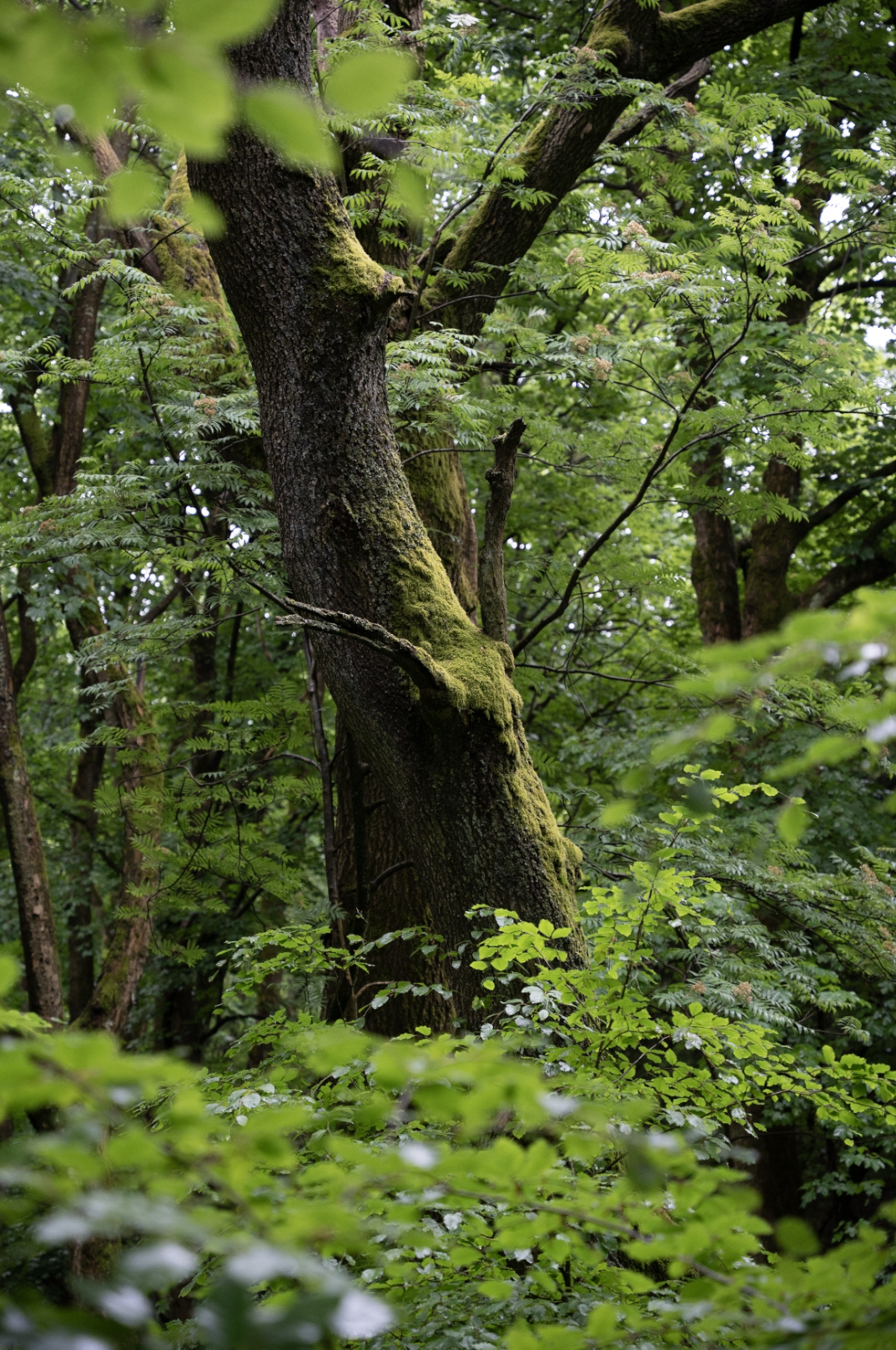
When I was wrapping up and had already packed my tripod, I noticed something I hadn't seen before: a shape resembling a skull or a face hidden in the tree.
That was the moment the ordinary section of forest stopped being just an arrangement of green and bark. A subject appeared. Something between an accidental pattern in nature and a figure that looked as if it had allowed itself to be seen, just for a moment.
That's where the title 'Leshy' came from. In Slavic folklore, the leshy was a forest spirit - a guardian of wild spaces, a being that was part human, part animal, part plant. I didn't want to make a literal illustration of the myth, but the shape in the tree immediately reminded me of something alive and not entirely friendly.
So I went back to the frame. I set up the tripod again and started looking for a position where the shape would be readable but not too obvious. I wanted the viewer to see the forest scene first, and only after a moment begin to recognize the face hidden in the bark.
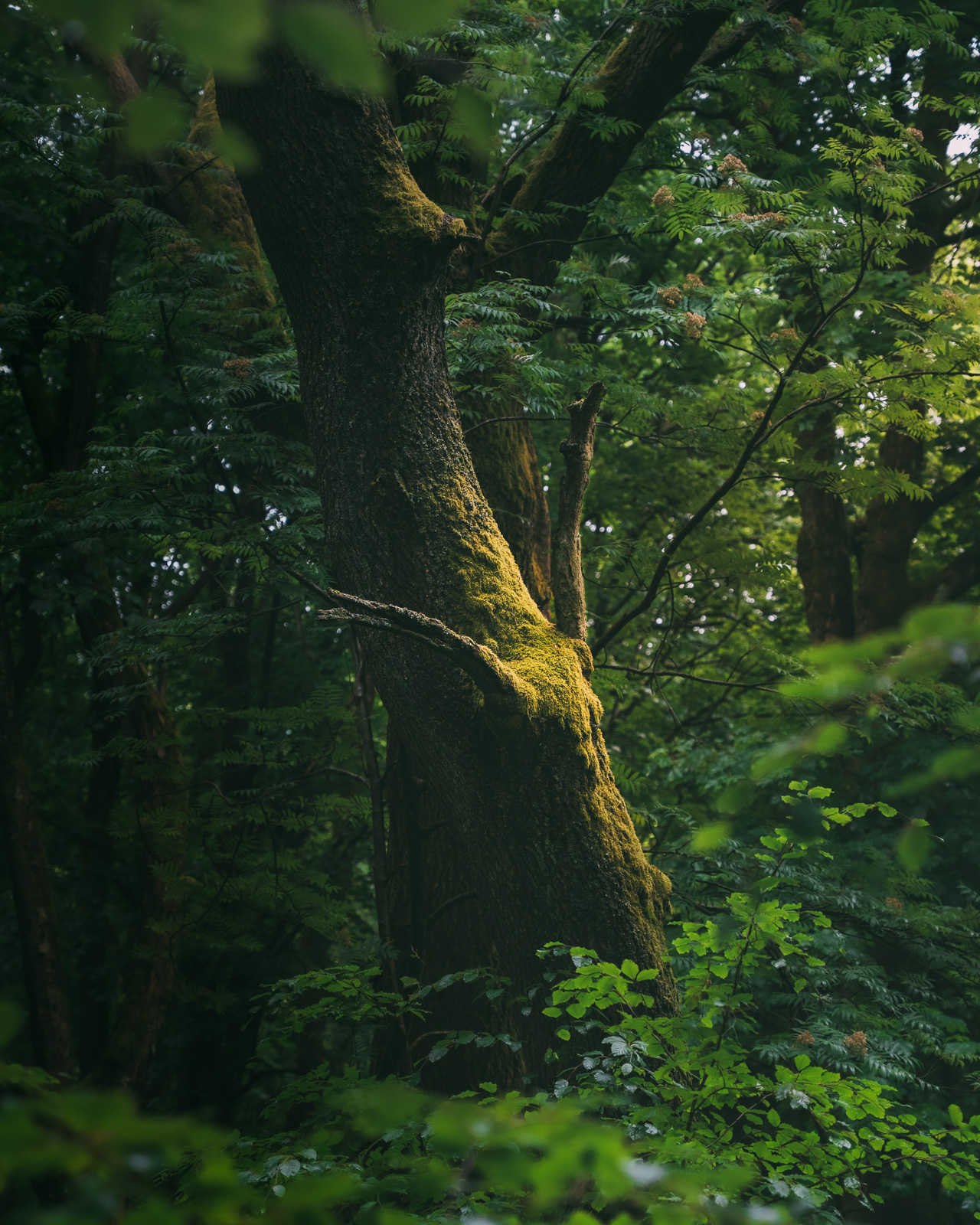
The hardest part was keeping the balance. If the composition was too wide, the motif disappeared in the chaos of branches and leaves. If it was too tight, it became too literal and lost the atmosphere of the place. In the end, the most important thing was leaving enough green around the tree for the image to still breathe like a forest.
The second part of the work began at home. The shape was already in the file, but it needed to be gently brought out. Not about creating something that wasn't there. More about directing attention to where I myself had stopped and looked, out in the field.
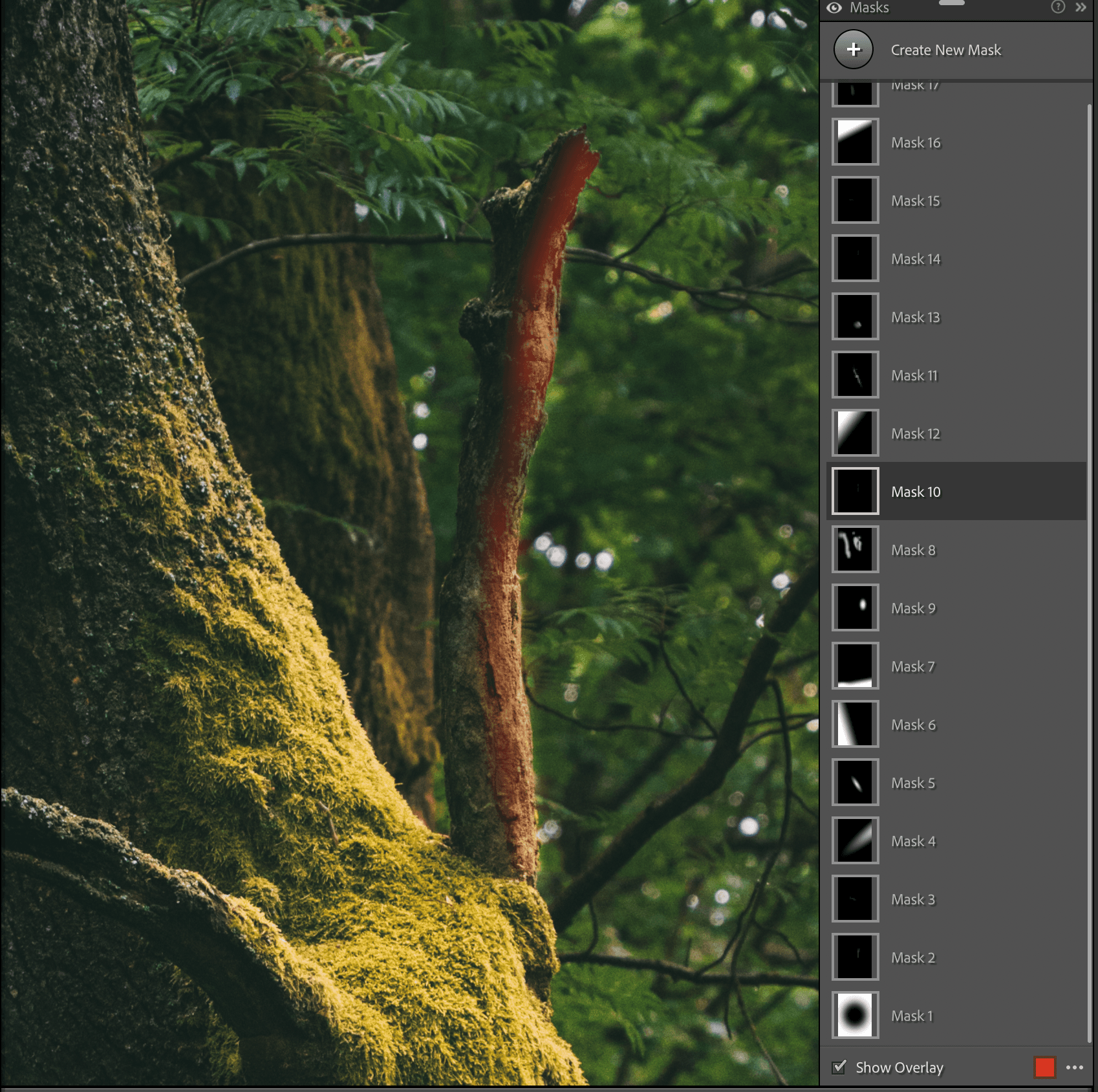
I started with color correction. I wanted to keep the wet, spring green but also shift the image toward a darker, more forest-like mood. Then I worked locally with masks: a bit more light and contrast on the moss, more separation on the trunk, fewer distracting details in the background, and a subtle guide for the eye toward the main subject.
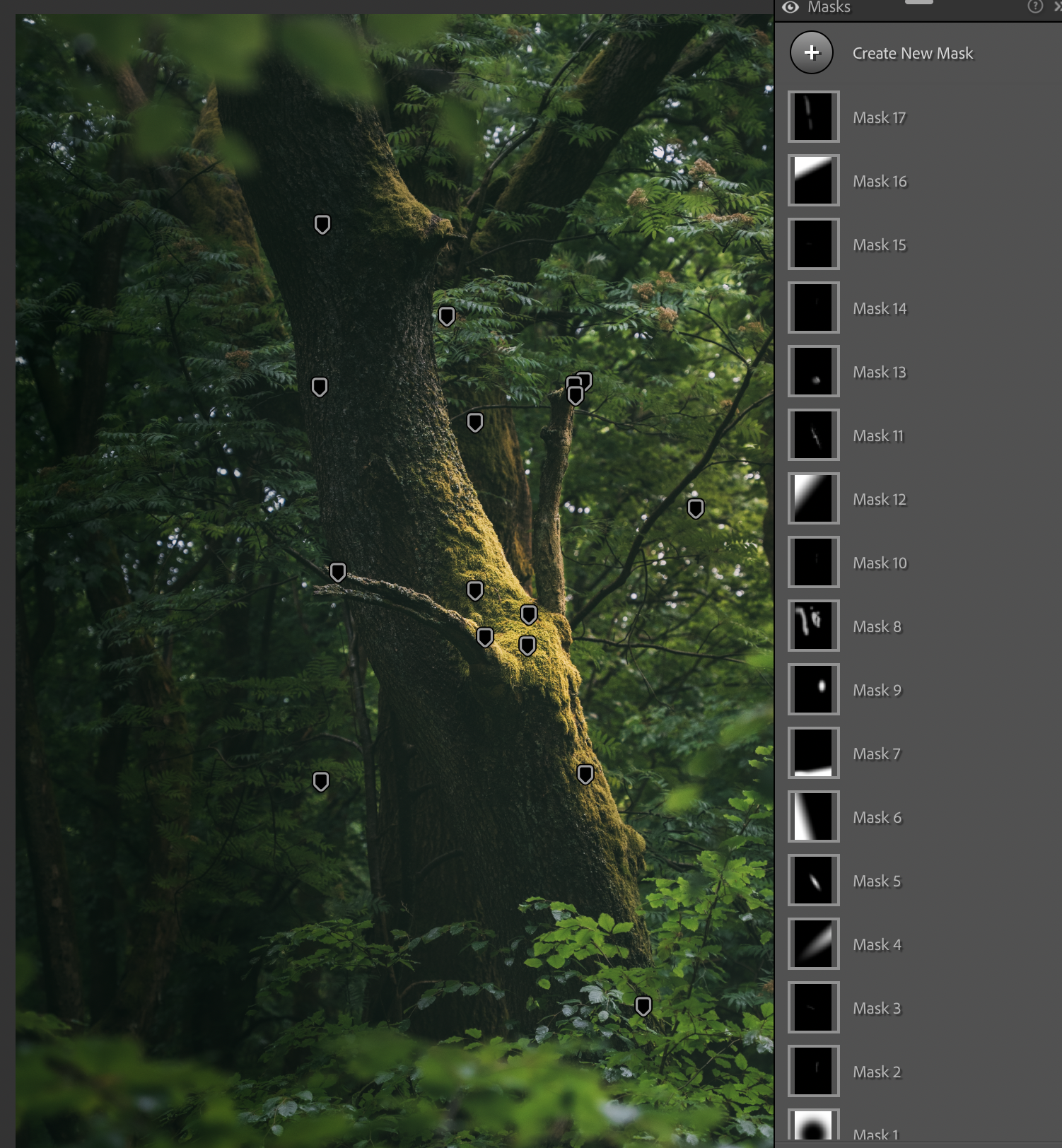
The small sections of the tree took the most attention. That vertical, broken branch started to function almost like a horn or part of a figure's silhouette. In the raw file it was just one detail among many. After being locally brought out, it became one of the elements that builds the character of the image.
This photo is a good example, for me, that a landscape doesn't always have to rely on a wide view, a mountain summit, or spectacular light. Sometimes a small patch of forest is enough - and a moment when the brain starts filling in a story around an accidental arrangement of bark, moss, and shadow.
What I find most interesting about these kinds of frames is that they can't be fully planned. You can choose the weather, the location, the time of day, the gear. You can walk through the forest for hours. But that one shape - you just have to notice it.
And I think that's why I like this photo. It didn't come from everything being planned in advance. It came from staying in the forest a little longer, stepping off the path, and taking one more look at a tree I had almost walked past.